About GamaVida
Who We Are
GamaVida helps organizations rehearse high-stakes decisions before they happen.
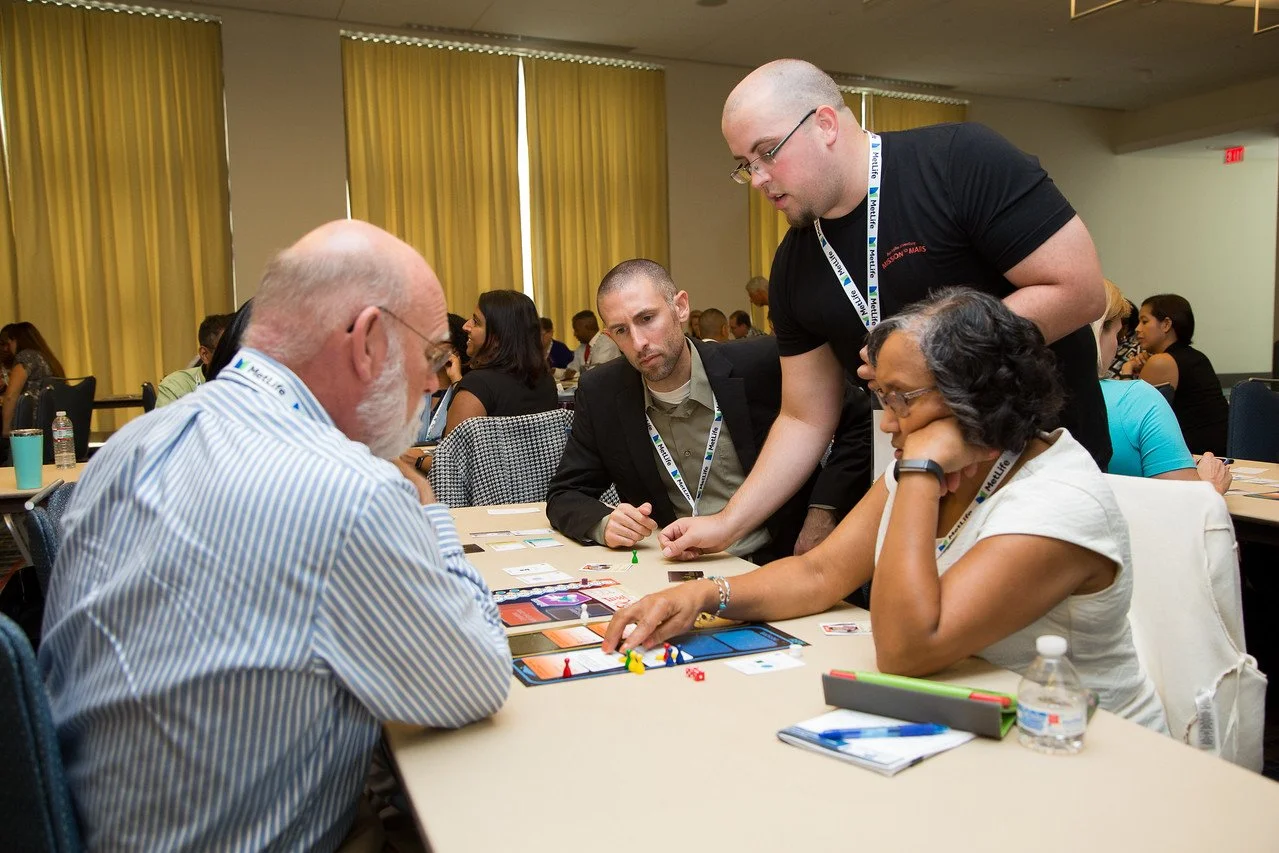
We design experiential learning scenarios and a framework that allow leaders and teams to practice judgment under real operating conditions - where time, pressure, uncertainty, and competing priorities are present.
Our work is grounded in a simple belief:
Knowledge alone does not change behavior.
Experience does.
Rehearsing Decisions That Matter:
i.e.: Onboarding
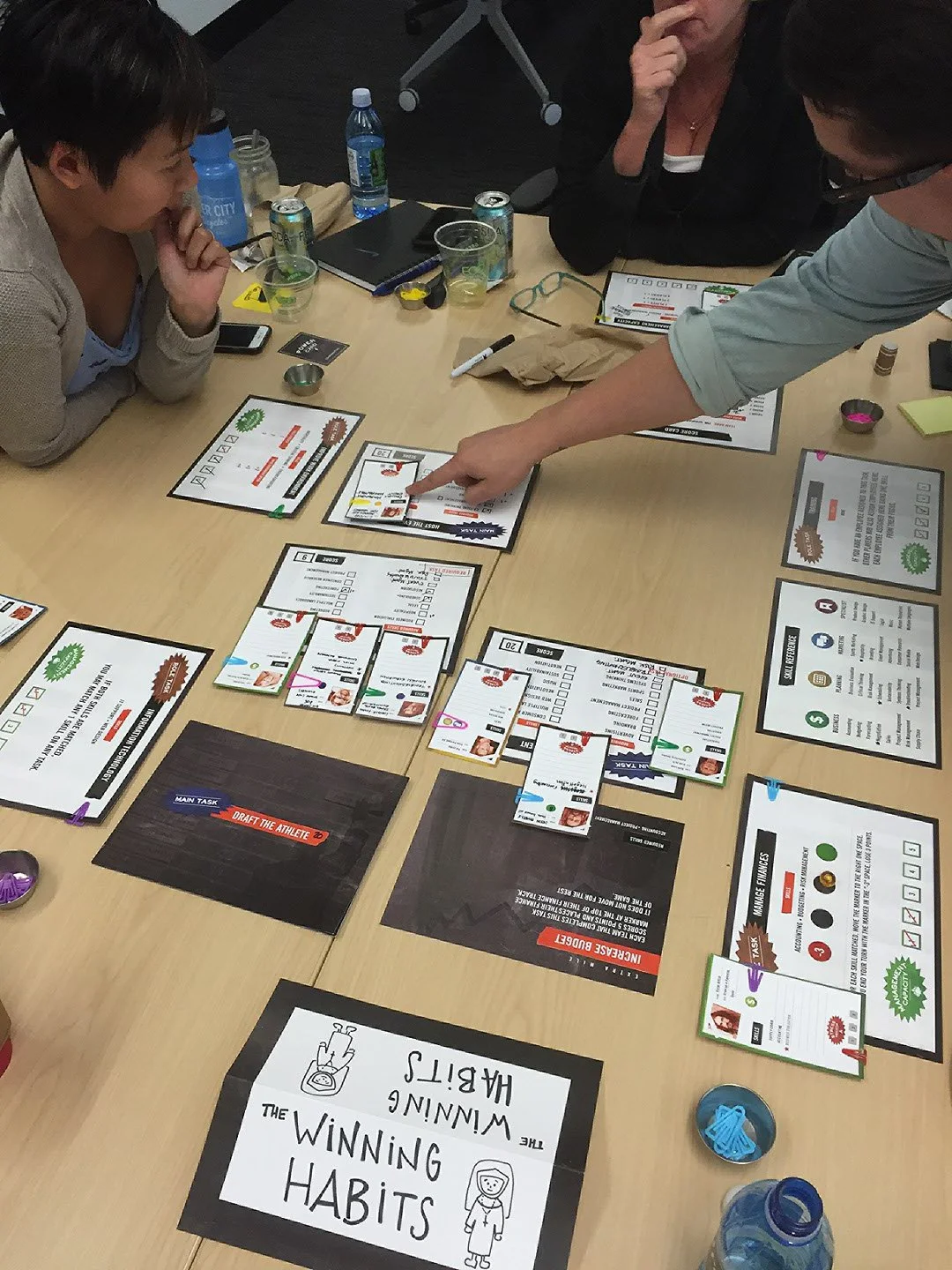
When GamaVida was asked to help design Nike’s Next Wave onboarding experience, the challenge was not information transfer. New hires already understood the brand, the products, and the expectations.
The real question was different:
How do you prepare thousands of new employees to make good decisions - under pressure, in motion, and in alignment with the Nike culture - before those decisions carry real consequences?
The solution was not more content.
It was rehearsal.
By placing participants inside realistic scenarios that reflected Nike’s pace, tradeoffs, and values, teams practiced judgment, navigated ambiguity, and experienced consequences safely - before stepping fully into their roles.
That constraint - preparing people for real decisions, not ideal conditions - has shaped GamaVida’s work ever since.
More About Our Process
-
All GamaVida engagements are built on The Experiential Spiral, a five-step framework designed to ensure learning transfers into real-world application.
1. Context
Ground learning in the actual decisions, pressures, and constraints participants face.
2. Experience
Place participants inside realistic scenarios where they must act, choose, and adapt.
3. Reflection
Create structured space to examine decisions, assumptions, and consequences.
4. Insight
Surface patterns, tradeoffs, and mental models that shape behavior.
5. Transfer
Reapply learning to real roles, real decisions, and future situations.
This spiral ensures experiential learning does not end with awareness - but results in durable behavioral change.
-
Focused, facilitated pilots where teams rehearse real decisions drawn from their operating context.
Participants encounter incomplete information, competing priorities, and real consequences - mirroring the conditions in which performance actually matters.
Scenario Sprints generate immediate signal around:
How decisions are truly made
Where judgment breaks down
What capabilities hold under pressure
They serve as both proof of value and diagnostic input for scaling experiential learning.
-
Following the pilot, GamaVida designs and deploys experiential learning frameworks that allow organizations to scale decision rehearsal across departments and time horizons.
These frameworks enable organizations to:
Design
Translate real decisions into repeatable experiential scenarios.Deploy
Deliver learning across roles, teams, and geographies.Measure
Track behavioral indicators and decision quality not participation metrics.Sustain
Embed experiential rehearsal into culture, leadership development, and workforce readiness.This transforms learning from isolated programs into managed organizational capability.
-
Our scenario architectures support decision-making across any learning environment, especially:
Leadership and culture development
Workforce readiness and onboarding
Strategy and transformation initiatives
Public service, health, and crisis response contexts.
Different environments, but the same requirements.
People must practice decisions not just understand them.

About Jonathan Estes
I am the Founder and CEO of GamaVida, an experiential learning and AI-powered EdTech company that helps enterprises replace passive content with scenario-based learning systems that drive measurable engagement, faster skill adoption, and on-the-job performance.
For more than 30 years, I have designed learning environments at the intersection of human behavior, technology, and decision science—including simulations, serious games, and experiential scenarios that reflect the complexity employees face in real roles. These environments allow learners to practice decisions, experience consequences, and build competence before performance is at risk.